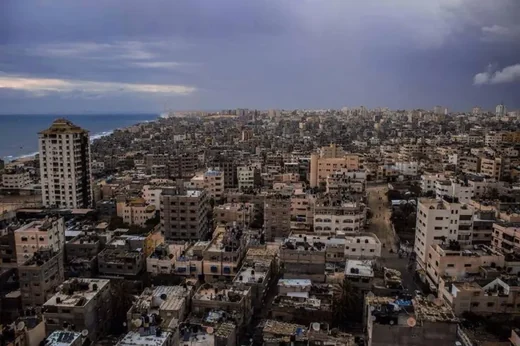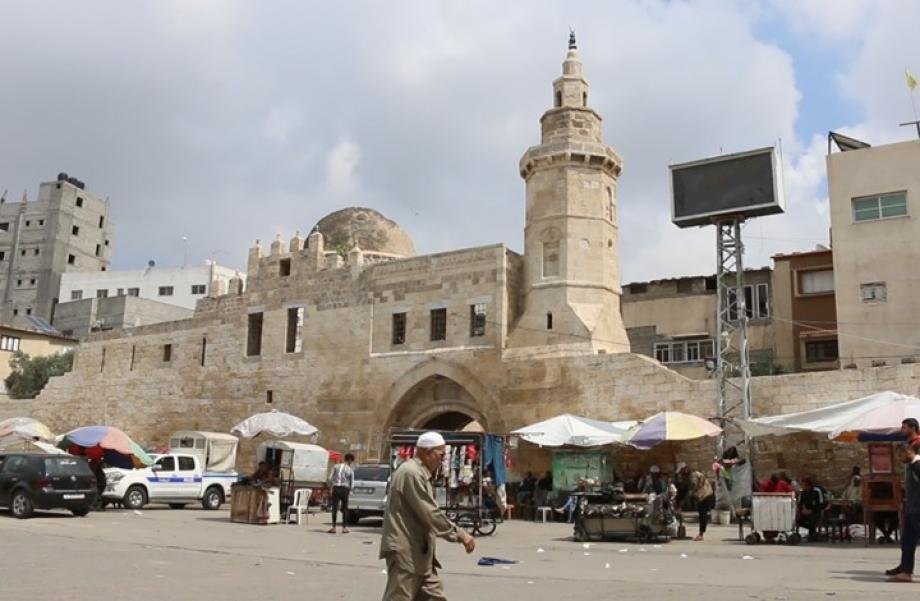
Khan Yunis lies where the fertile coastal plain meets the desert fringes of the Negev to the east and Sinai to the south, making its site a bridge for trade caravans and invading armies. The Mamluks founded the town in the fourteenth century, and the khan built there gave it its name.
Its crops include grain, vegetables, watermelon, melon, citrus, almonds, olives and sugar cane, but it is best known for guava, favoured by its climate and fresh water. Its industry is light — dairy, baking and similar trades needing little capital.
To the north, in al-Majdal, the “Gaza dress” was woven from black, blue or green-and-pink striped cotton, and the fabrics spread across the rest of the Strip with refugees after 1948.
Source: “Khan Yunis” — Wikipedia, https://en.wikipedia.org/wiki/Khan_Yunis
Cover photo: Rawanmurad2025 — Wikimedia Commons, CC BY-SA 4.0.
Media