Deir al-Balah’s history reaches back to the Late Bronze Age, when it was one of the forts of the New Kingdom of Egypt. In the mid-fourth century AD the monk Hilarion built a monastery there, known today as the shrine of al-Khidr.
Ottoman records name the place Deir Darom; “Darom” derives from “Droma”, meaning the south — the southern coastal plain, the Hebron valley and northern Negev. Its produce then included barley, wheat, grapes, vine leaves, olives, mulberry, lemon, figs, melon, pomegranate and dates.
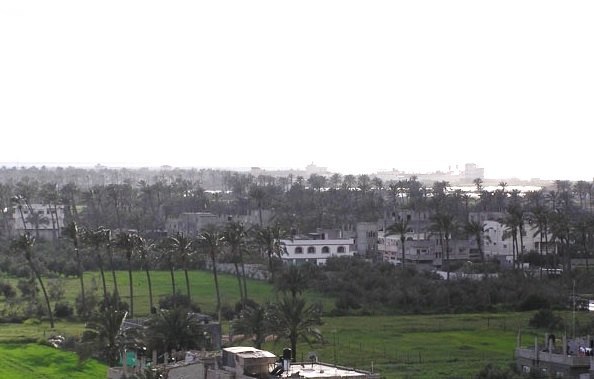
From the late nineteenth century the name “Deir al-Balah” — the monastery of the dates — prevailed, taken from the palm grove west of town, after it had been known locally as Deir Mar Jirjis or Deir al-Khidr.
Source: “Deir al-Balah” — Wikipedia, https://en.wikipedia.org/wiki/Deir_al-Balah
Cover photo: شنكوتي — Wikimedia Commons, CC0.